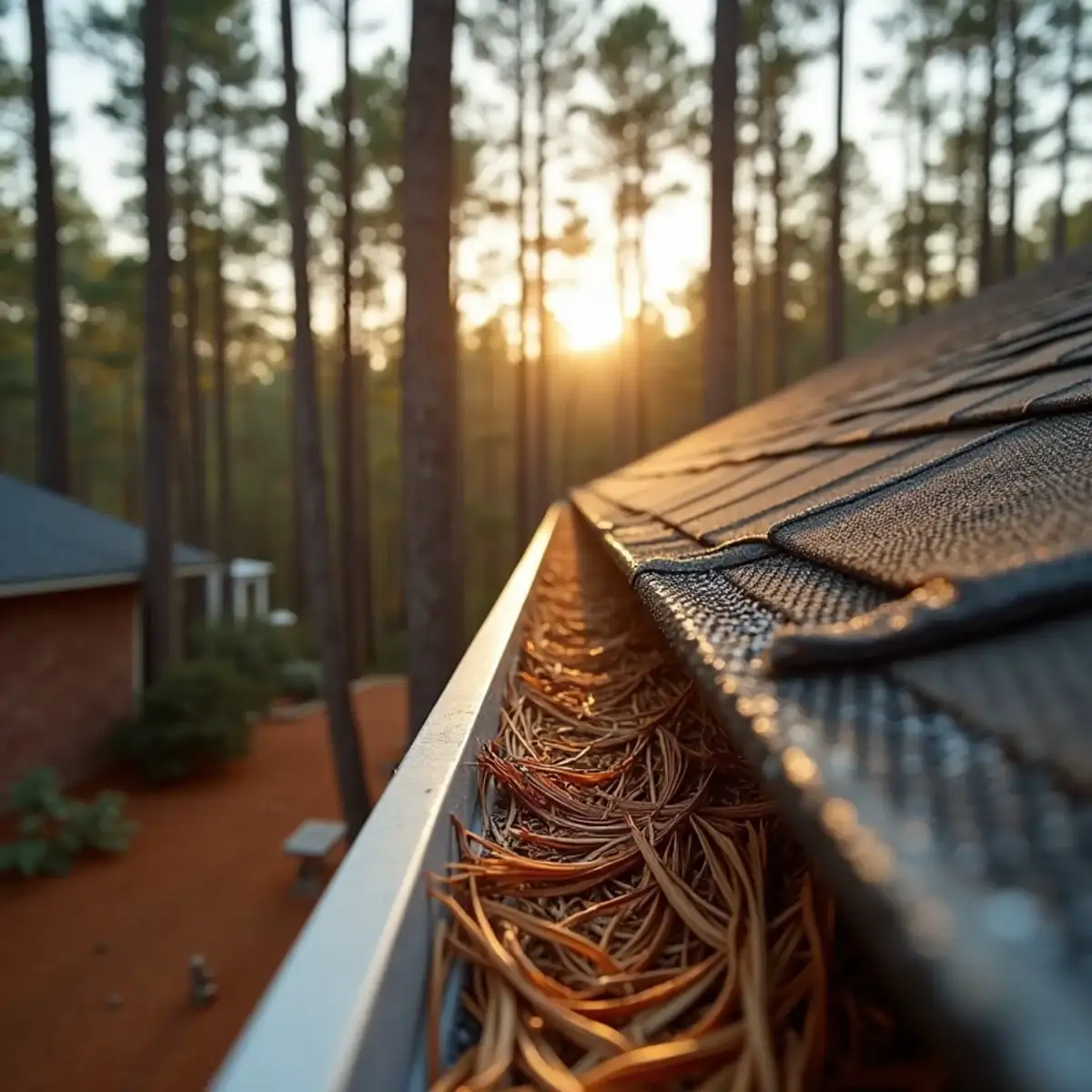

Gutters overflow in heavy rain for one of seven reasons: debris is blocking the trough or an outlet, the gutter is too small for the roof plane feeding it, there are too few downspouts or they are too narrow, the slope runs the wrong way, hangers have let a section sag, water is shooting past the gutter off a steep or edge-less roof, or a guard has matted over. Each cause leaves a different clue, and each has its own fix.
Clemson averages 52.4 inches of rain a year, and much of the summer total arrives in short, hard thunderstorms. Those bursts expose weak spots that a gentle rain never finds. Here is how to read the clues and match the repair to the cause.
First, watch where the water comes over
Next time it pours, stand under a porch or at a window and watch the gutter for a few minutes. Where the water spills tells you more than anything else. If it is dry out, a garden hose run onto the roof at the high end of a gutter shows the same thing on a smaller scale.
| What you see | Most likely cause | Usual fix |
|---|---|---|
| Spill at one spot, often near a downspout | Clogged outlet or elbow | Clear and flush the outlet and downspout |
| Water sheets over the whole run in a downpour | Gutter or downspouts undersized for the roof | Add an outlet, upsize downspouts or go to 6-inch |
| Spill in the middle of a run, water standing after rain | Sag or reversed slope | Rehang and re-slope the section |
| Water pours over the front at a valley corner | Concentrated valley flow | Outlet near the valley, a splash guard or a larger gutter |
| Water falls between the gutter and the house | Missing drip edge or gutter set too low | Add drip edge or gutter apron, reset the gutter |
| Water skims across the top of a guard | Guard matted over with debris | Brush the guard clean, rethink the guard type |
Clogs: the most common cause and the easiest fix
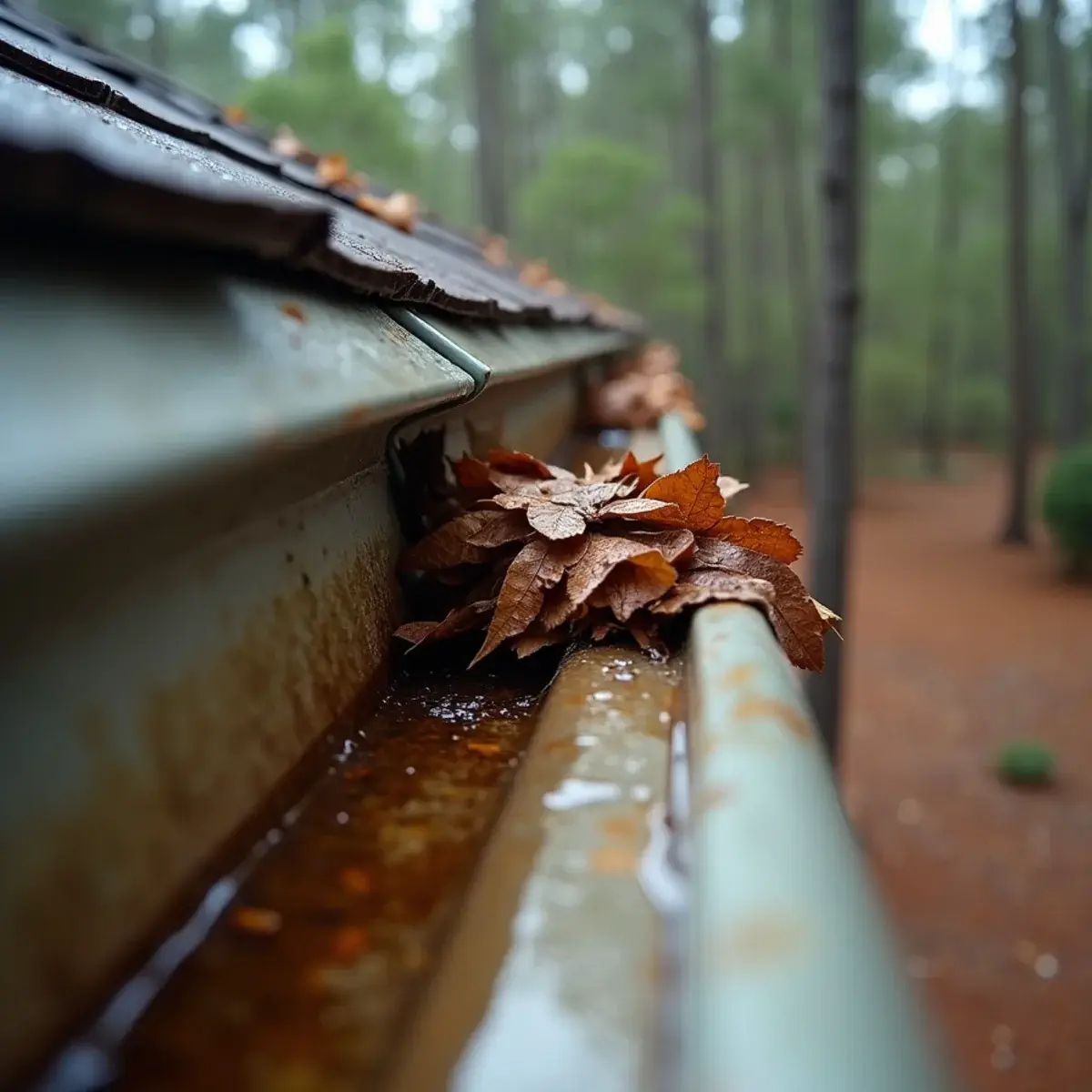
Around Clemson, gutters fill with loblolly pine needles, oak leaves, sweetgum balls and, every March and April, a coat of yellow pollen that turns into sludge once it gets wet. The trough can look mostly clear from the ground while the outlet is packed solid. One clogged outlet turns a 40-foot run into a bathtub.
The fix is hand-clearing the trough, then flushing each downspout until water runs freely out the bottom. Elbows at the top and bottom of a downspout are the usual choke points. If you would rather not do it from a ladder, gutter cleaning that includes a downspout flush handles both in one visit.
Gutters too small for the roof: 5-inch runs on big planes and valleys
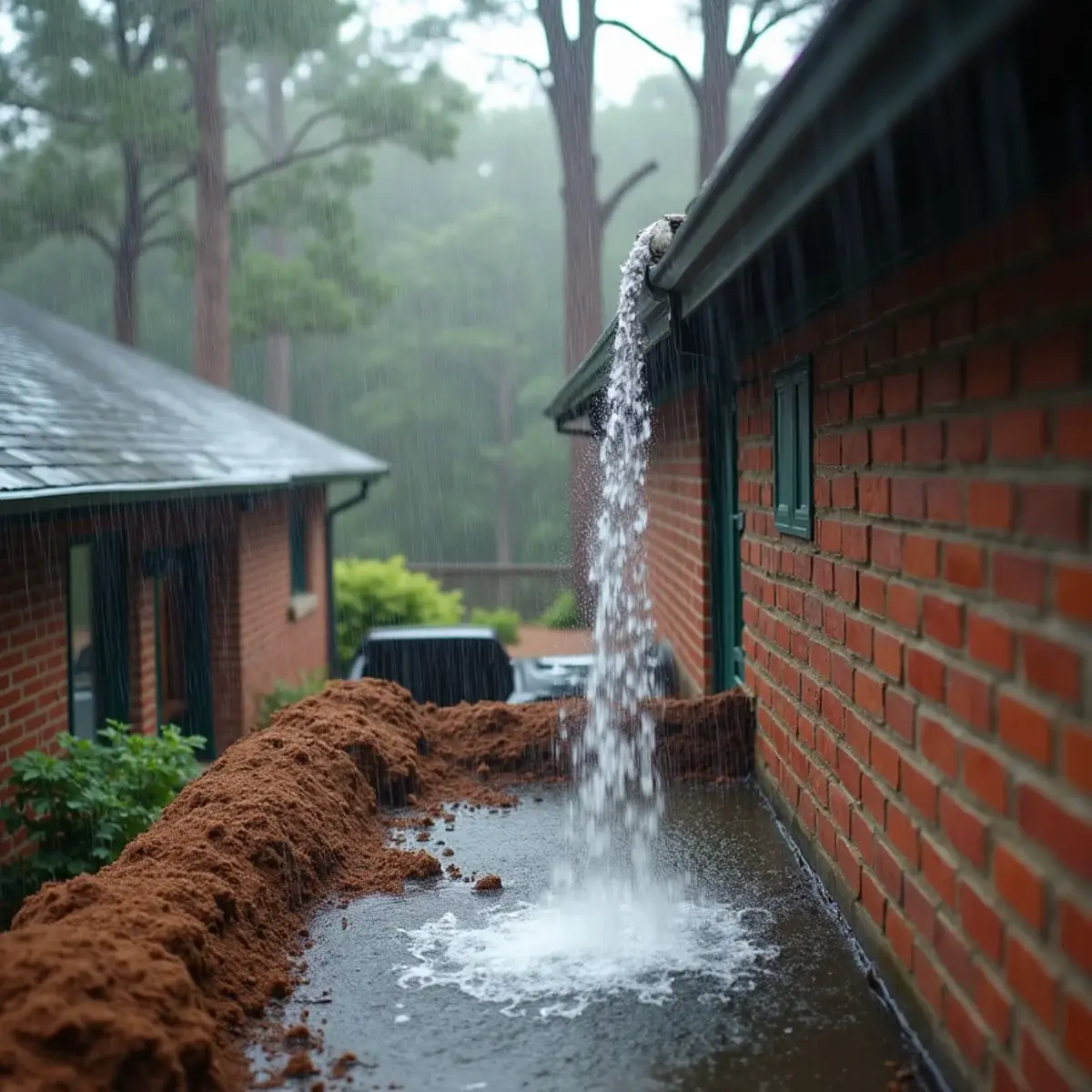
A clean gutter can still overflow if it is simply too small. The 5-inch K-style gutter is standard on most houses, and it does fine on modest roof sections. It struggles where a large, steep roof plane drains into one run, or where two roof slopes meet in a valley and send a stream of water into a single corner.
Signs of an undersized gutter: it overflows only in the heaviest storms, it overflows even right after a cleaning, and the spill is worst at the end farthest from the downspout. The fix is either a larger gutter on that run or more outlets so the water has a shorter path out. Switching the problem runs to 6-inch gutters is a common part of gutter installation sized for Upstate rain.
Too few downspouts, or 2x3 downspouts that choke
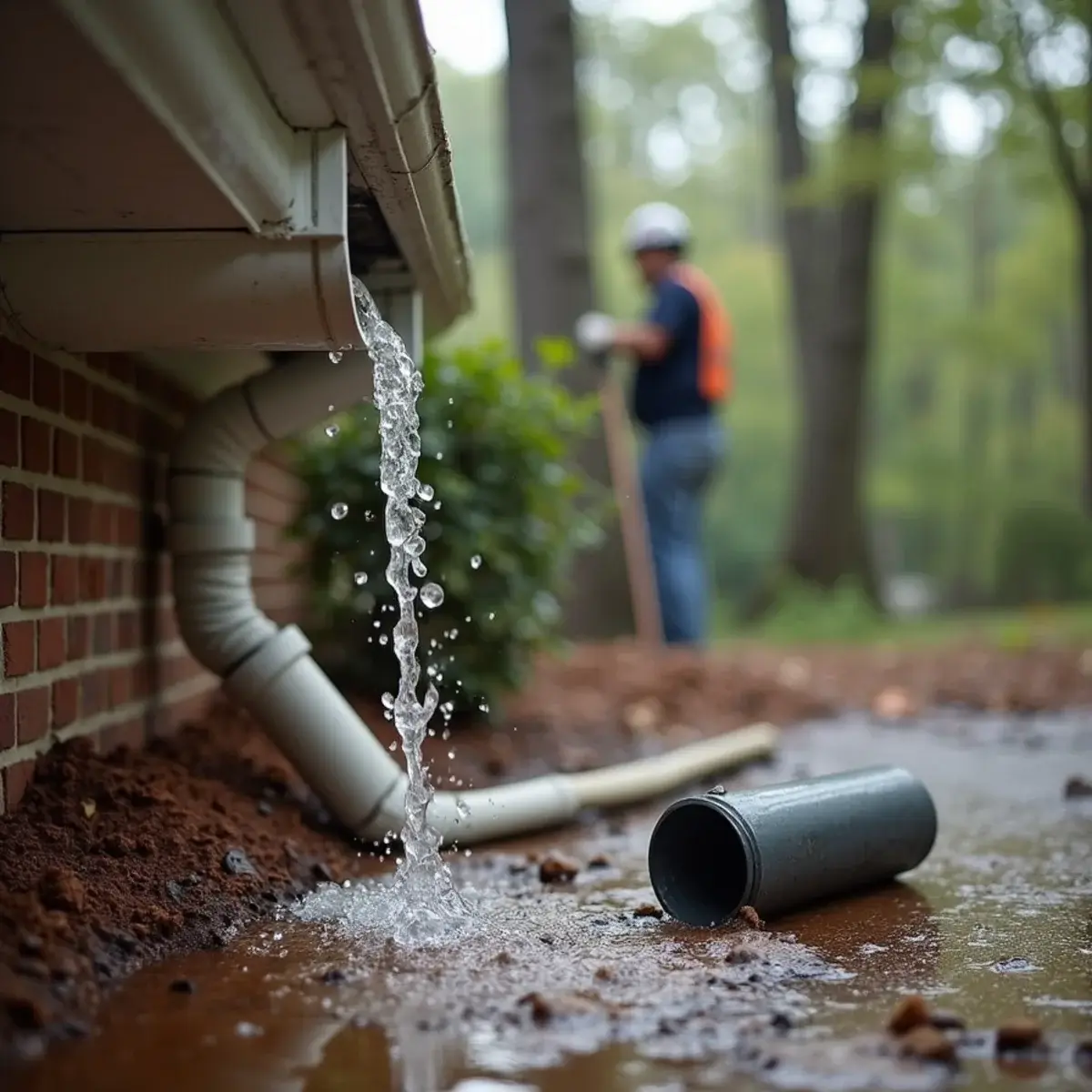
Downspouts are the drain in the sink. Many older homes have one downspout per long run and the narrow 2x3 size. In a cloudburst, the gutter can collect water faster than that one opening can carry it away, so it backs up and spills even when nothing is clogged.
- Add an outlet near the middle of a long run or close to a valley so the water does not have to travel the full length.
- Upsize to 3x4 downspouts, which carry far more water and are harder to clog with pine needles.
- Check the far end of the downspout too. If it empties into a buried pipe that is crushed or full of silt, water backs up into the gutter.
Wrong slope and sagging hangers
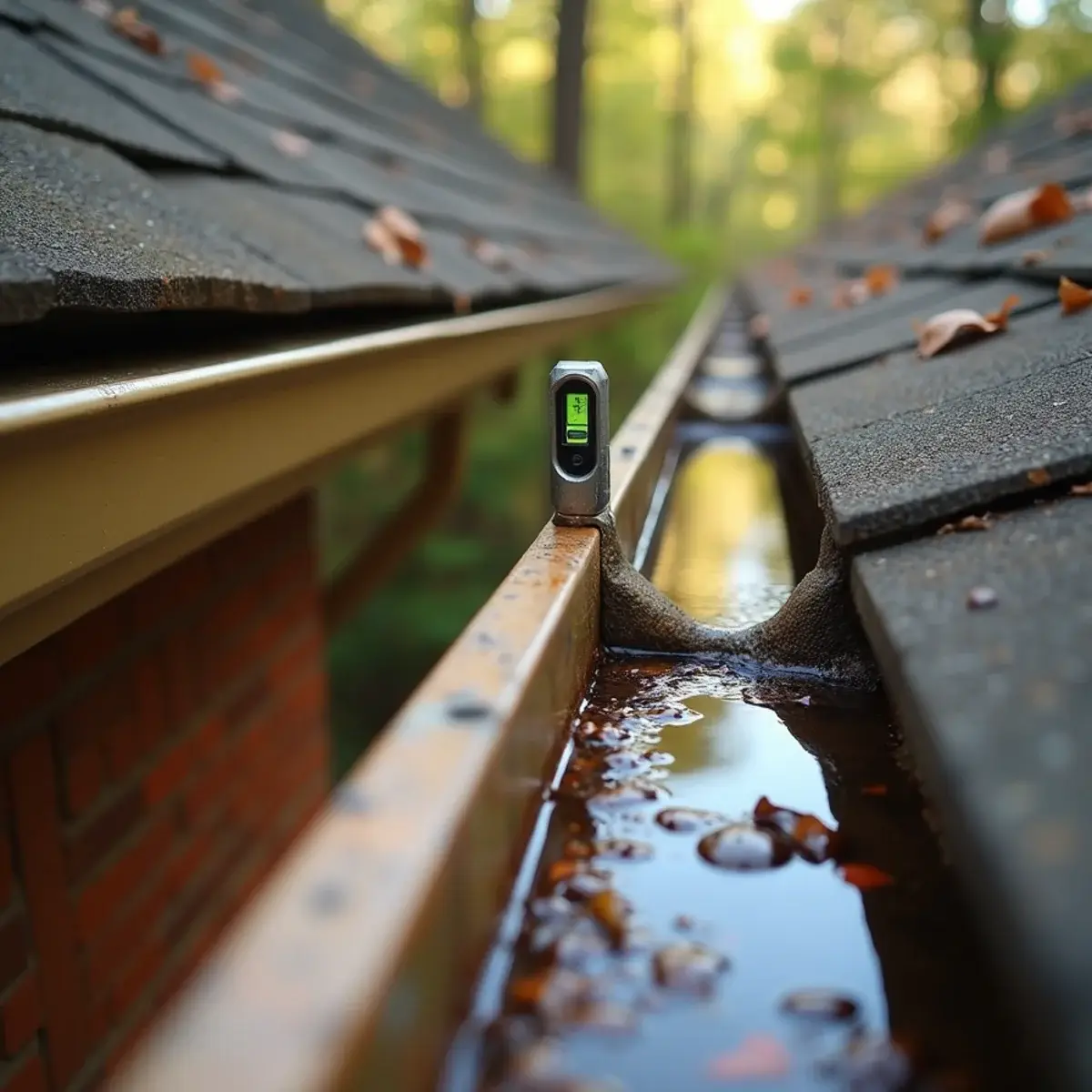
Slope
A gutter should fall gently toward its outlet, roughly a quarter inch every 10 feet. Too flat and water sits; tilted the wrong way and it pools at the dead end and spills there. Settling, a past repair or a fascia board that was never straight can all throw the slope off. Standing water a day after rain and a line of grime along one stretch are the giveaways.
Sagging hangers
Many homes built from the 1960s through the 1990s still have gutters hung with spikes and ferrules. Over time the spikes back out of the wood, the gutter dips, and every dip becomes a low spot. Older houses around downtown Central and its rental streets show this a lot. The fix is rehanging with hidden hangers screwed into the fascia or rafter tails about every two feet, and resetting the slope while the section is loose.
If the fascia is soft where the spikes pulled out, it needs replacing first. A gutter repair visit should include a check of the wood behind the gutter, not only the metal in front of it.
Water overshooting the gutter: steep pitch and missing drip edge
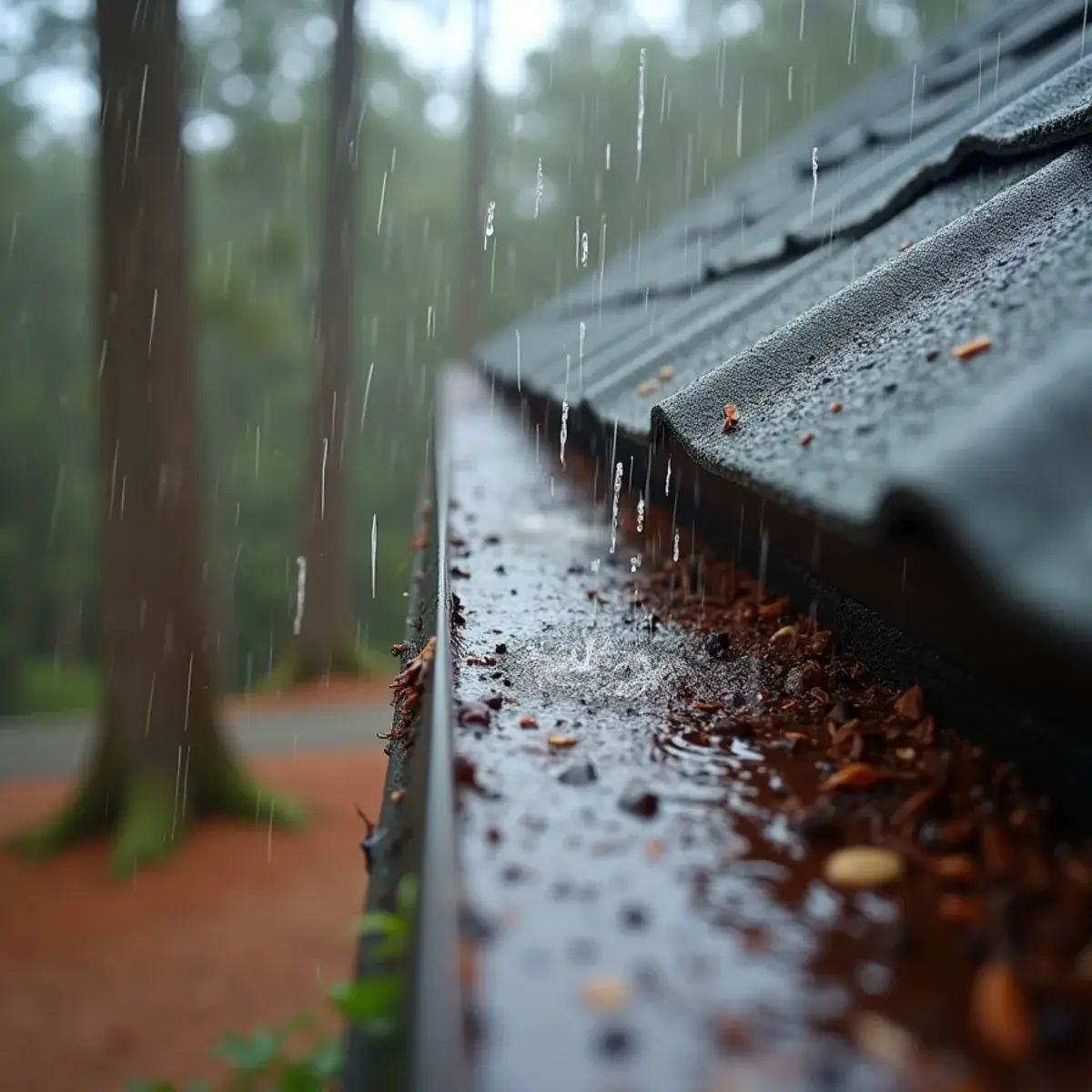
Sometimes the gutter is fine and the water never reaches it. On a steep roof, a hard rain can come off the shingles fast enough to fly over the front lip, especially at valleys. Lowering the gutter slightly or adding a splash guard at the corner usually solves it.
The opposite problem is water running behind the gutter, down the fascia and onto the siding. That usually means the roof has no drip edge or gutter apron, the strip of metal that bridges the gap between shingles and gutter, or the gutter was hung too low beneath it. Adding drip edge is a modest job, and it protects the fascia from the slow rot that leads to bigger repairs.
Guards that mat over in a downpour
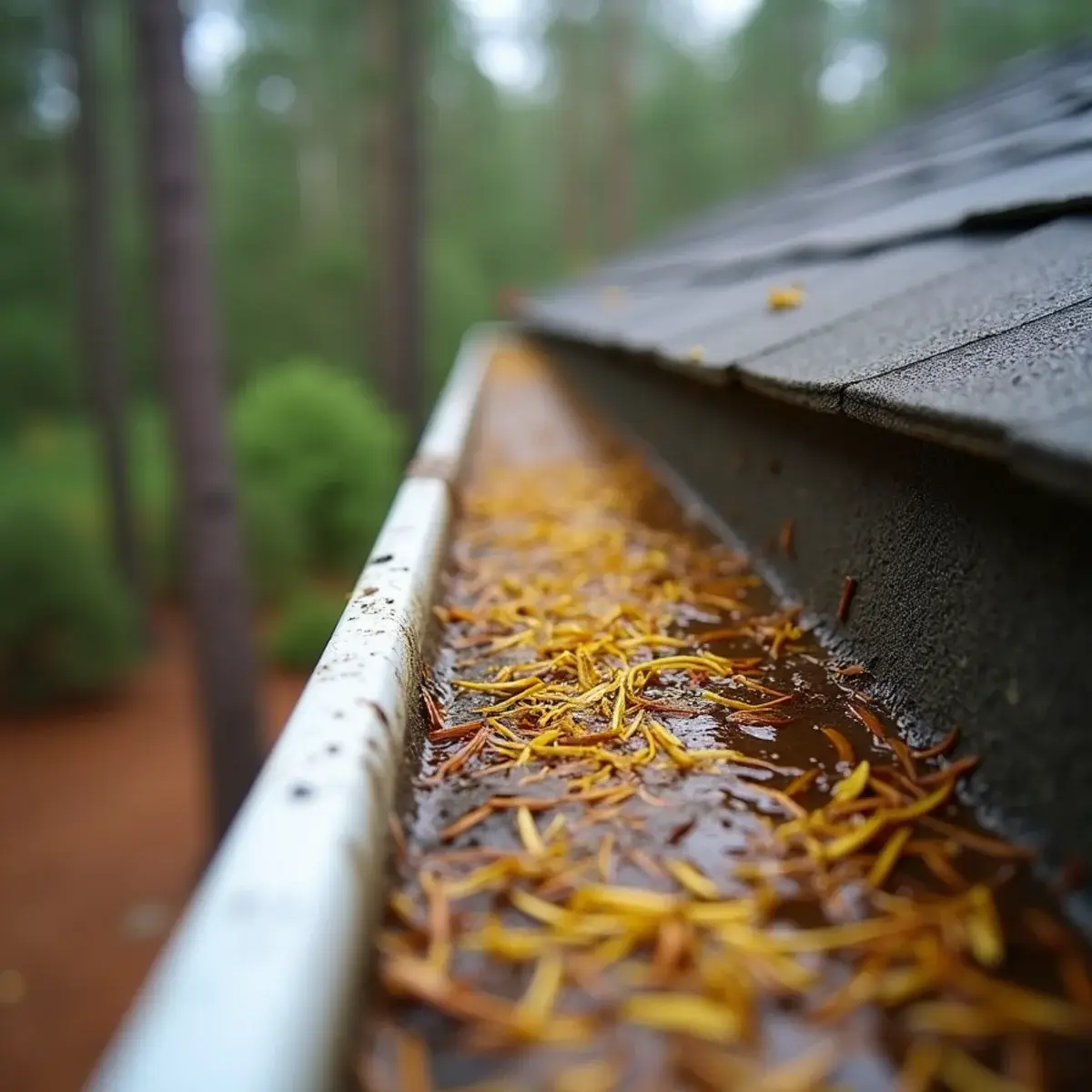
A gutter guard is meant to keep debris out, but the surface itself can clog. Pine needles weave into a mat on top of coarse screens, and spring pollen leaves a film on fine mesh. In a hard rain, water skims across that layer and over the edge instead of dropping through.
Brushing the guard clean usually brings it back. If a guard mats over every season, the type may be wrong for your trees, or it may be set too flat. Remember that every guarded gutter still needs its outlets and downspouts checked at least once a year.
Expert insight: why no gutter keeps up with every storm
Gutters are sized for how hard rain falls in a short burst, not for how much falls in a year. Clemson's 52.4 annual inches matter less than the summer storm that dumps an inch in twenty minutes. On August 4, 2026, Clemson took about 2.91 inches in 30 minutes, a rate that would overwhelm almost any residential gutter, 6-inch included.
So the honest goal is not zero overflow, ever. It is gutters that handle the ordinary hard thunderstorm without spilling, and that, in the rare extreme one, spill where it does no harm. That means:
- Fix the valleys first. A valley concentrates water from two roof planes into one corner. A valley splash guard, an outlet placed right at that corner, or a larger gutter on that run solves more overflow than upsizing the whole house.
- Add outlets before upsizing everything. A second downspout on a long run often does more than going from 5-inch to 6-inch, and costs less.
- Decide where overflow lands. If a run is going to spill in the worst storms, make sure it is not the one over the walkout door or the crawl space vent.
The tradeoff: splash guards and extra outlets are cheap fixes for specific spots, while bigger gutters and 3x4 downspouts fix capacity everywhere but mean new gutters. An installer who watches the overflow pattern can tell you which one your house needs.
The bottom line on overflowing gutters
Overflow is a symptom, and where the water comes over tells you the cause. One spot points to a clog or a valley, a whole run points to size or slope, and a gap behind the gutter points to drip edge or fascia. Fix the cause and the overflow stops; clean a gutter that is simply too small and it comes back with the next storm.
If your gutters spill in ordinary rain, call (855) 633-0442. We line up a local installer who traces the water from the roof edge to the downspout outlet and puts the fix and the price in writing. Start with gutter repair for sags, leaks and slope, or gutter cleaning if the outlets are packed.
Questions readers ask
Why do my gutters overflow even after they were just cleaned?
If a freshly cleaned gutter still spills, debris is not the problem. Look at capacity and shape instead: a 5-inch gutter under a large or steep roof plane, a valley dumping into one corner, a single 2x3 downspout on a long run, or a section that has lost its slope. A hose test on a dry day shows where water stalls. An installer can tell you whether an extra outlet, bigger downspouts or a 6-inch run is the right fix.
Is a little overflow in a big storm normal?
An occasional splash at a valley during the heaviest few minutes of a summer thunderstorm is common. Steady sheets of water over a long run, spills in ordinary rain, or water landing against the foundation are not. Those signs point to a cause worth fixing, because repeated overflow rots fascia, stains siding and dumps water where the house can least afford it.
Can overflowing gutters damage the house?
Yes. Water that comes over the front lands beside the foundation and can soak a crawl space or wash out beds. Water that runs behind the gutter soaks the fascia and soffit, which leads to rot, and it can reach the wall framing. Fixing the cause of the overflow is far less work than repairing what it damages over a few wet seasons.