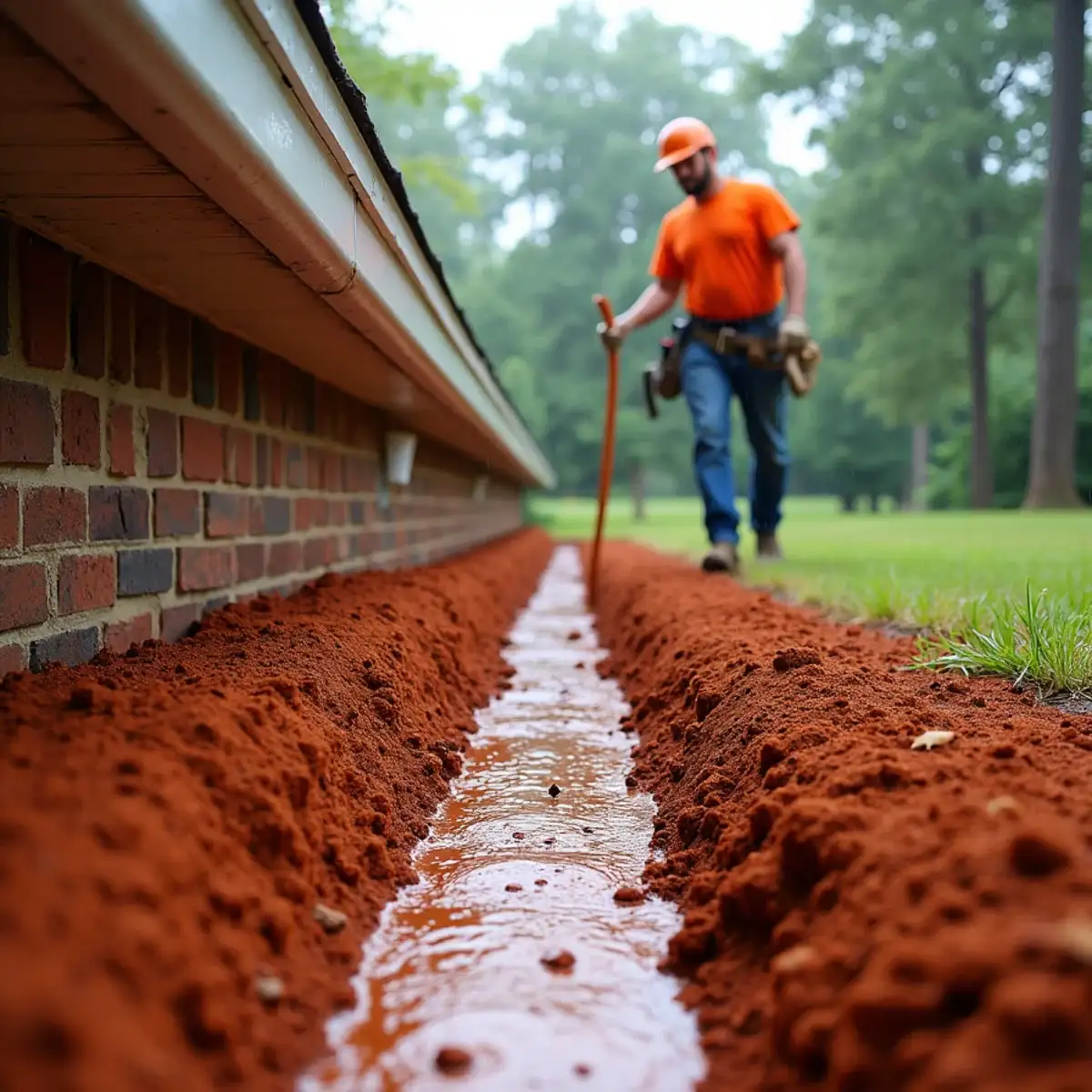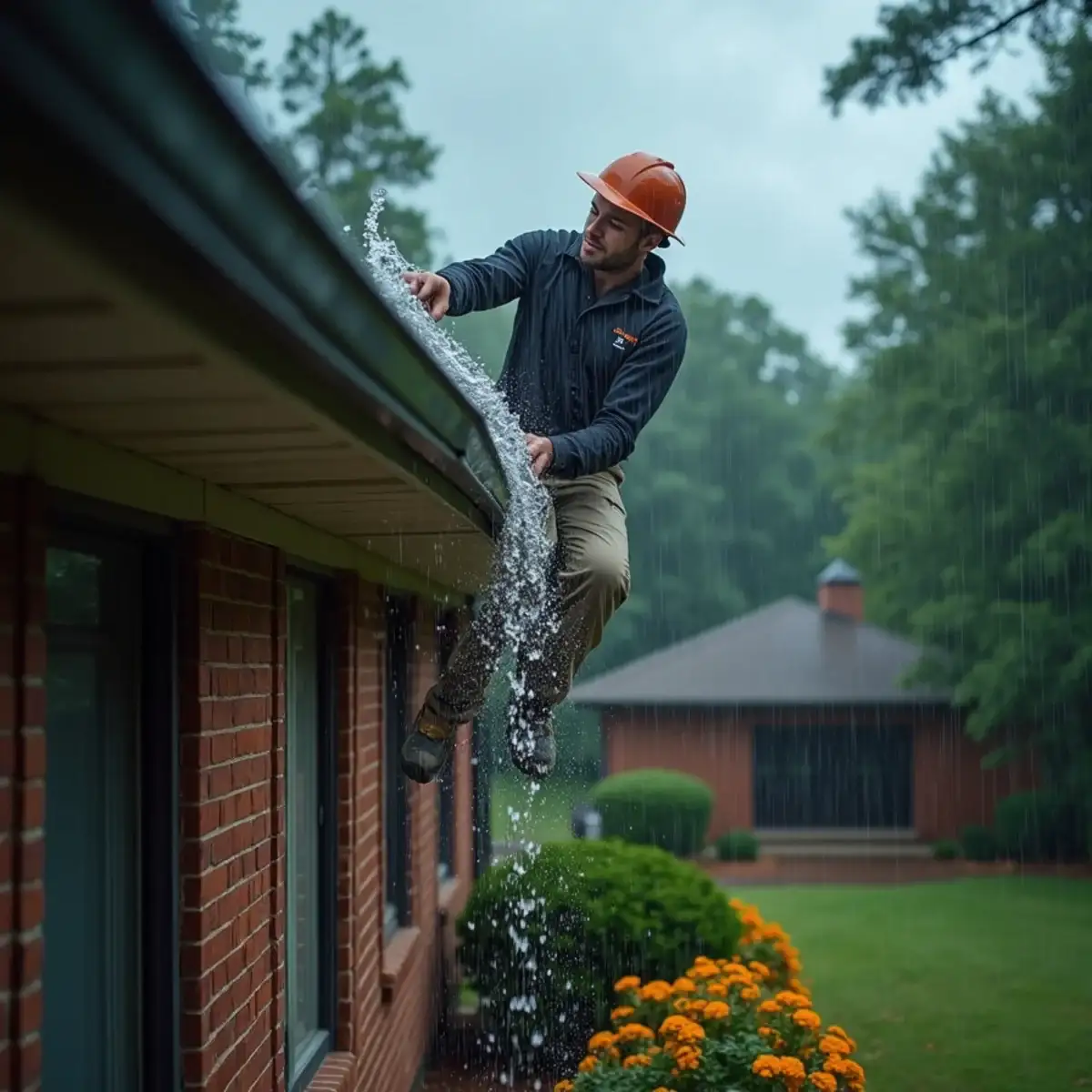
A gutter system is only half done when the gutters are hung. Every gallon the roof sheds has to leave through a downspout, and around Clemson that water lands on red clay that will not take it in. If the downspouts end at the foundation, the water stays there.
Repel Dry Gutter Pros connects you with independent local installers who handle downspout installation, extensions and buried drain lines. Call (855) 633-0442, tell us what the yard does in a storm, and we line up an installer who can trace the water and fix where it goes.
Signs your downspouts are the problem: washouts, mulch in the yard, a damp crawl space
Downspout trouble rarely shows at the downspout. Walk the house during or right after a hard rain and look for these:
- A gully or bare clay below an elbow where grass or pine straw used to be.
- Mulch spread across the lawn or piled against the driveway after every storm.
- Orange-red splash marks on brick or the bottom course of siding.
- Water pooling near the foundation that stands for hours after the rain stops.
- A musty, damp crawl space or puddles on the vapor barrier.
- Overflow at one corner only, which usually means that downspout is clogged or undersized.
If water spills over the gutter instead of running out the bottom, read why gutters overflow in heavy rain, or see repairing leaking and sagging gutters.
What downspout and drainage work includes
Downspout installation and drainage jobs range from a single extension to a buried line across the yard. A written quote should spell out which of these your house gets:
- Tracing every downspout from the outlet in the gutter to where the water actually ends up, with a note on pooling, washouts or soft spots.
- New or larger downspouts: extra outlets cut into long runs, or 2x3 downspouts swapped for 3x4 where the roof sheds more than they carry.
- Extensions and splash blocks that carry water at least 4 to 6 feet out onto ground that falls away from the house.
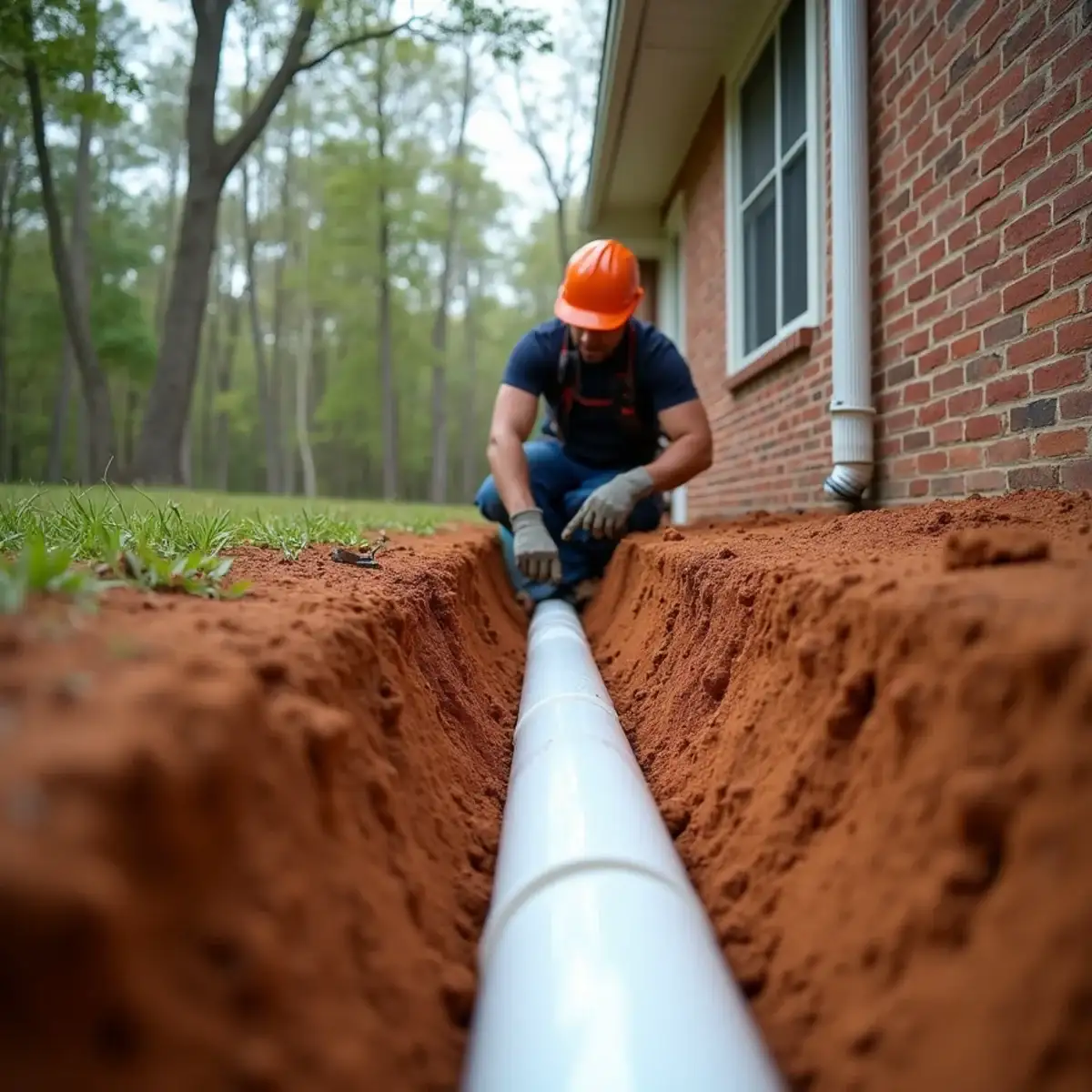
- Buried drain lines in smooth-wall pipe, laid with steady fall to a daylight outlet or a pop-up emitter, with a cleanout near the house.
- Clearing or repairing old underground lines that are clogged with needles, silt or roots, or crushed by a mower.
- Restoring the trench and yard after digging, with the clay packed back and seed or mulch replaced as agreed.
- A water test with a hose in the gutter, so you can see the water arrive at the outlet.
Red clay and slopes: why roof water does not soak in around Clemson
The Piedmont clay under most Upstate yards is dense. In a summer thunderstorm it absorbs a fraction of the rain and sheds the rest as runoff. A roof that concentrates that rain into four or five downspouts turns each one into a small stream.
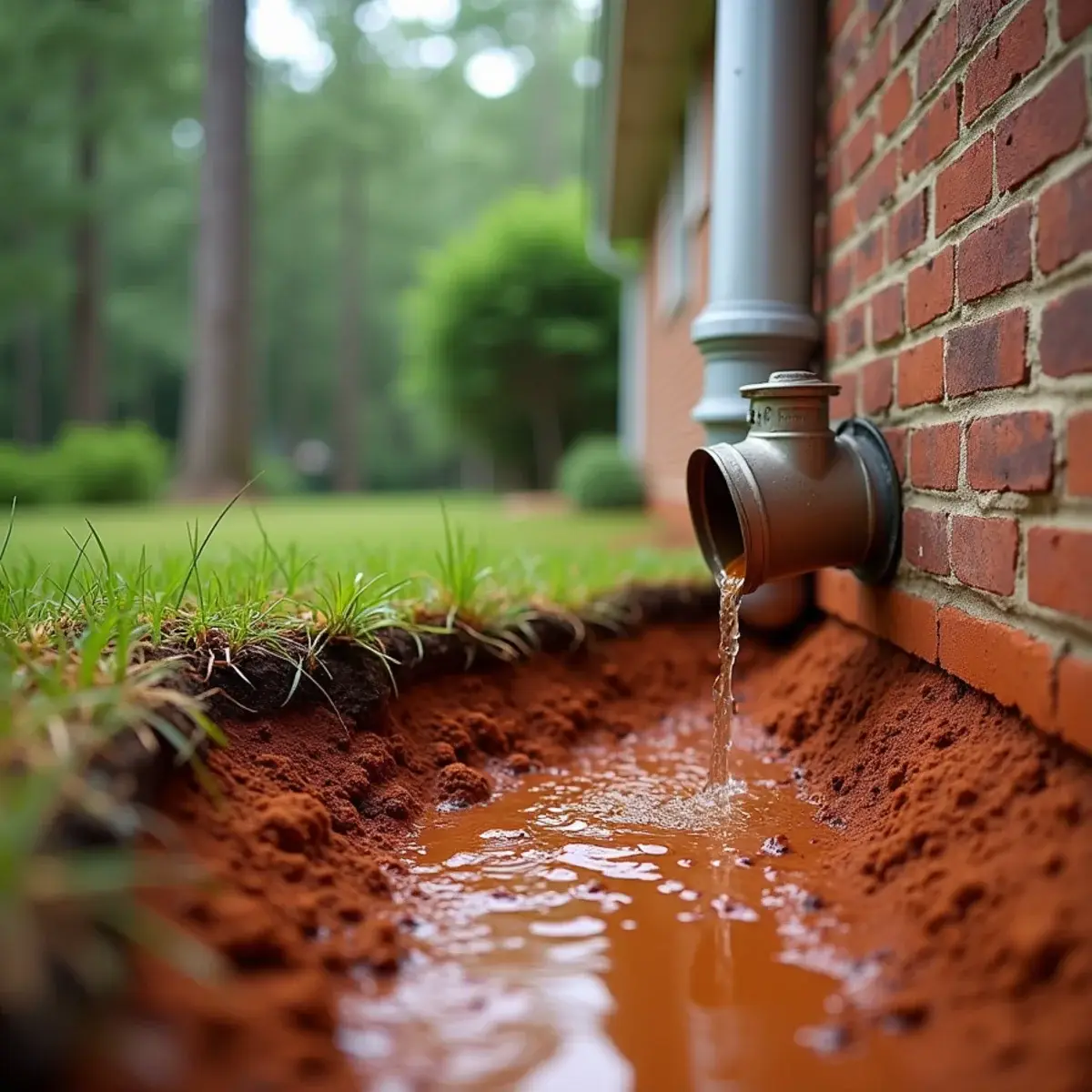
Slope decides where that stream goes. Clemson sits in the Blue Ridge foothills, and many lots fall away from the street toward a creek or the lake. Uphill, runoff flows back toward the house; downhill, it cuts a channel. Settled backfill also leaves a shallow trench that holds water against the wall. Our article on red clay and downspout drainage goes deeper.
Adding or upsizing downspouts (2x3 vs 3x4)
Many older Clemson houses have 2x3-inch downspouts, sometimes only two for the whole roof. With 52.4 inches of rain a year, much of it in short bursts, that is often too little outlet capacity.
| 2x3 downspout | 3x4 downspout | |
|---|---|---|
| Capacity | Smaller; fine for short runs and small roof sections | Carries roughly twice the water of a 2x3 |
| Clog resistance | Pine needles and sweetgum balls bridge the opening | Wider throat passes debris more easily |
| Typical match | 5-inch gutters on small roofs | 6-inch gutters, long runs, steep or large roofs |
Adding a downspout means cutting a new outlet, ideally near a roof valley where water concentrates, and running the drop to a spot where discharge can be carried away. Upsizing to 3x4 often pairs with larger gutters on a new seamless gutter installation.
Extensions and splash blocks: the simple fixes
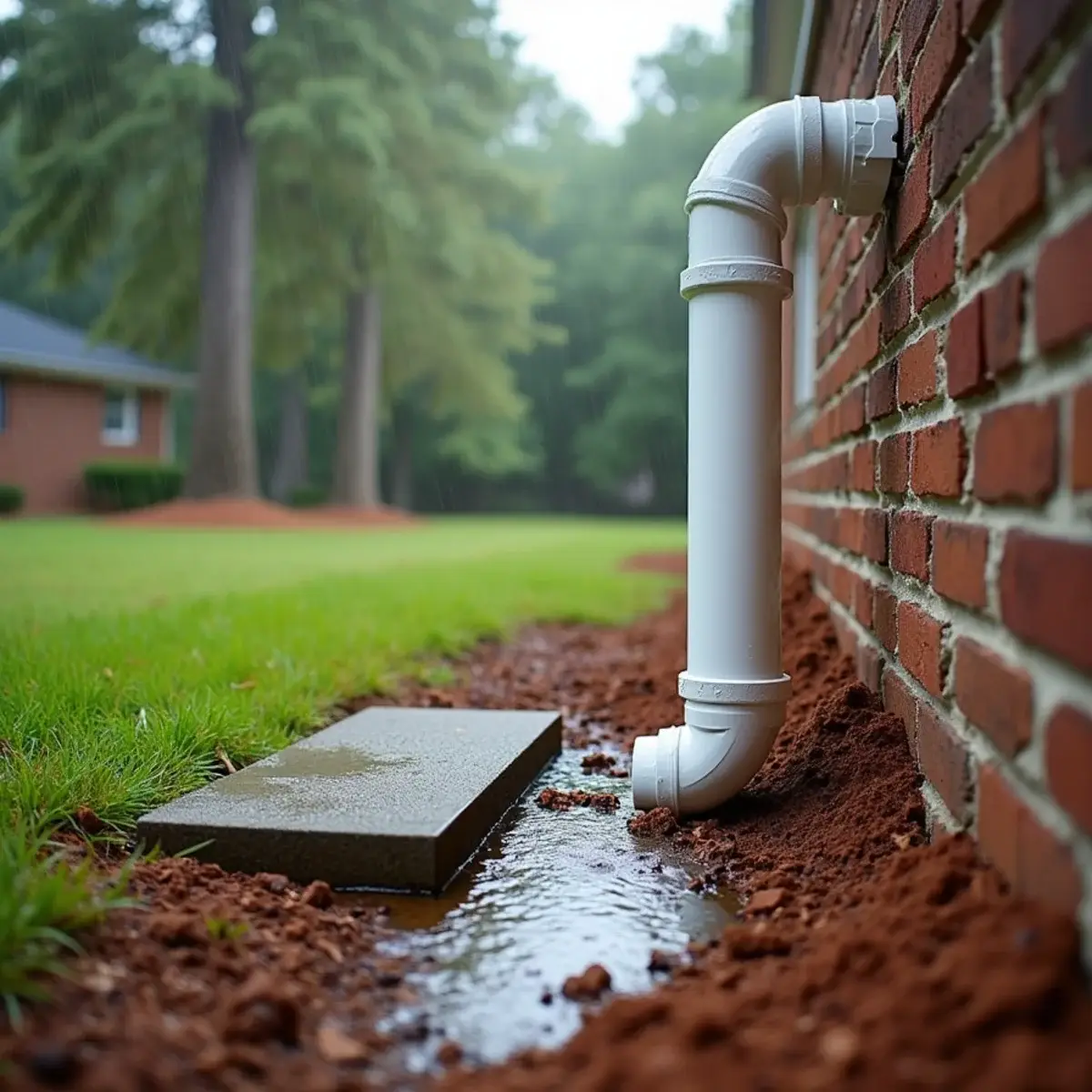
Before burying pipe, try getting the water four to ten feet from the foundation at the surface. On a lot that slopes away from the house, a downspout extension plus a splash block is often all that is needed.
- Rigid extensions attach to the elbow and carry water out across the bed.
- Hinged flip-up extensions lift out of the way for mowing.
- Splash blocks sit under the outlet so water does not drill into the clay. They must slope away from the house.
- Screwed elbows keep extensions from being knocked off.
Buried downspout drains and pop-up emitters
When an extension would cross a walkway, a driveway or a flat yard, the answer is an underground downspout drain: a buried pipe running downhill to an outlet well away from the house.
Solid pipe vs corrugated pipe
Smooth-wall solid PVC is the better choice for a buried downspout. It sheds grit, can be snaked or jetted, and resists crushing. Corrugated pipe is quicker to lay, but its ridges trap needles and clay silt, and it can flatten under a mower. Perforated pipe does not belong on a downspout line: it leaks water back into the soil by the foundation.
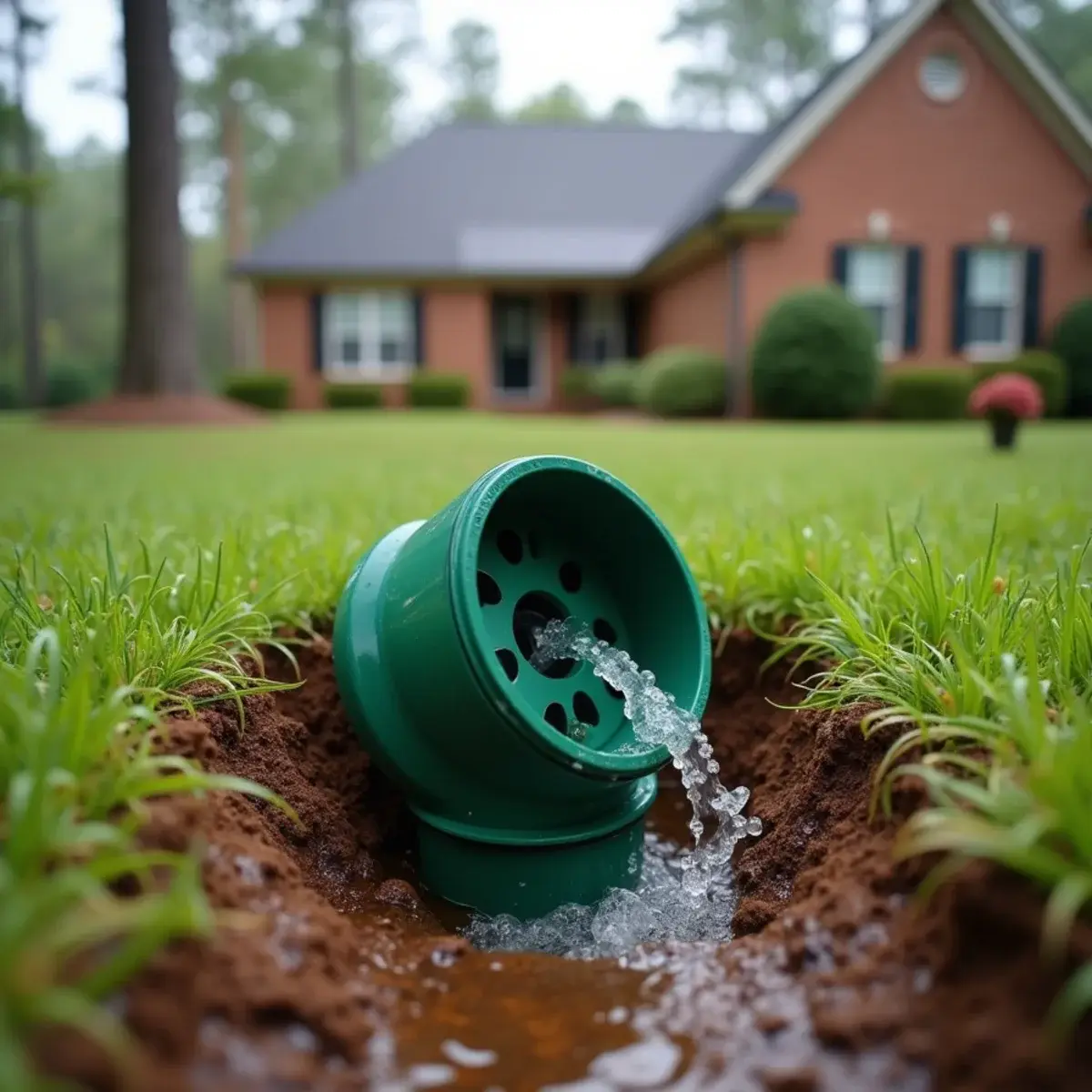
The line ends at a daylight outlet on a slope or a pop-up emitter in the lawn, whose lid lifts when water arrives. On flat clay lots the emitter may sit in a small gravel pocket. Good lines keep steady fall and include a cleanout near the house.
Walkout basements, crawl spaces and lake lots: carrying water past the foundation
The houses that need drainage most are built into hills. Clemson Heights split-levels with walkout basements have a tall downhill wall where the back downspouts all drop. Water left there soaks the clay and finds its way through the slab joint or the block.
- Walkout basements: route uphill downspouts around the side, not over the walkout wall, and carry the downhill ones well out into the yard.
- Crawl spaces: crawl space water usually starts as a downspout dumping beside a vent or a low spot along the foundation. Moving discharge away is the first step, before any interior fix.
- Lake lots: homes along Lake Hartwell and Lake Keowee near Seneca have long back rooflines, decks and steep yards down to the water. Lines there should spread the water so it does not carve the bank; check any shoreline rules for your lot first.
Older homes in historic Pendleton raise a different issue: downspouts placed long ago next to stone or brick piers, where splashback has been wearing at the mortar for decades.
Clearing and repairing clogged underground lines
Pine needles, oak tassels and shingle grit wash down and settle wherever a buried pipe flattens out. Signs of a blocked line:
- Water burping out of the joint where the downspout meets the buried pipe.
- The gutter above that downspout overflowing even after it was cleaned.
- A soggy strip of lawn along the line, pointing to a crack.
- An emitter that never opens.
Downspout repair underground starts with a flush from the cleanout, then a snake or jet, then digging if it will not clear. Crushed corrugated or root-damaged runs usually get replaced with solid pipe. Clean gutters upstream keep lines clear; regular gutter cleaning includes a downspout flush.
How a drainage visit works, step by step
- Call and describe what the yard does in rain: where water pools, what washes out, and whether the crawl space or basement gets damp.
- The installer walks the property and traces each downspout, checking how the ground slopes and where water can safely go.
- You get options and a written price, usually from the simplest fix (an extension) to the most complete (a buried line), so you can choose.
- Utilities are marked before any digging. South Carolina's 811 service locates buried lines so a trench does not hit them.
- The work is done, whether that is new downspouts, extensions or trenching and laying pipe with a steady fall.
- Water test and cleanup. Water runs through the system while you watch, and the yard is put back the way the quote says.
What affects downspout and drainage cost
- Scope: a few extensions and splash blocks versus new outlets and buried lines on every corner.
- Length and depth of trench, plus what it crosses: lawn, beds, roots or a walkway.
- Pipe type: solid PVC versus corrugated, and the number of fittings and cleanouts.
- Discharge point: daylight on a slope versus pop-up emitters with gravel pockets.
- Downspout size and height, especially two-story drops and walkout walls.
- Existing lines: clearing or digging up a failed buried run first.
We send installers to Clemson and each of the towns on our service area page. Every gutter installer we send is licensed where South Carolina requires it, and insured.
Why Clemson homeowners get downspout and drainage work through Repel Dry Gutter Pros
- Installers who know red clay. Clay sheds water instead of soaking it up, so outlets have to go farther out and lines need more fall than in sandy soil.
- The simplest fix that works. An extension is offered before a trench when it will do the job, and you see both options priced.
- Gutters and drainage looked at together. If the real problem is an undersized gutter or a missing outlet, you hear that before money goes into the ground.
- A price before work starts, including yard restoration after digging.
- Insured installers, licensed where South Carolina requires it. Every gutter installer we send is licensed where South Carolina requires it, and insured.
Downspout drainage across Clemson and nearby towns
Installers we work with fix downspout drainage across Clemson, from sloped lots with walkout basements in Clemson Heights to lake homes on the Lake Hartwell side. Around the area, the drainage problem looks a little different in each town:
- Easley: new subdivisions where builder downspouts empty onto bare clay and cut channels toward the street.
- Pendleton: older homes with crawl spaces and low foundations that need water carried well clear of the walls.
- Seneca: steep lake lots where long buried lines carry water down the slope away from tall walkouts.
- Central and Anderson: older houses whose original downspouts end right at the foundation.
The full list of towns is on the service areas page.
Downspouts and Drainage questions from Clemson homeowners
How far from the house should a downspout discharge?
Aim for at least four to six feet from the foundation, and farther on clay or where the yard is flat or slopes toward the house. Ten feet or more is common beside a walkout basement. Distance alone is not enough: the ground at the outlet must fall away from the house, or the water runs back. Where the surface will not carry it, a buried line to a pop-up emitter does the job.
Why is water pooling by my foundation after rain?
The usual causes are a downspout that ends right at the wall, an extension that has been knocked off, or a buried line that is clogged and backing up at the joint. Settled backfill can also leave a low strip along the foundation that holds water. Overflowing gutters dump water there too, so check whether the gutter above is spilling. On red clay, any of these leaves standing water because the soil absorbs it so slowly.
Can buried downspout lines clog?
Yes. Needles, leaves, grit and clay silt wash into the line and settle at low spots, flat sections or tight bends. Corrugated pipe clogs more easily than smooth-wall solid pipe because debris catches in the ridges. Clean gutters, a strainer or leaf catch at the top of the downspout and a cleanout near the house make a buried line far easier to live with. Most clogs can be flushed or snaked; crushed pipe has to be dug up and replaced.
How many downspouts does my house need?
It depends on roof area, roof pitch, gutter size and where the valleys are. A common rule of thumb is a downspout for every 30 to 40 feet of gutter, with one placed near each valley that funnels a lot of water. Long runs often do better with a downspout at each end. Larger 3x4 downspouts handle more roof per outlet than 2x3. An installer can look at your roof layout and the overflow spots to say where outlets are missing.
How deep and how sloped should a buried downspout line be?
Most buried downspout lines around Clemson run about 12 to 18 inches deep, which is plenty in a place with almost no frost. The bigger issue is fall: the pipe should drop steadily the whole way, commonly about a quarter inch per foot, so water and silt keep moving. Lines with flat spots or dips are the ones that clog.
Can I point my downspouts toward the street or my neighbor's yard?
Avoid sending concentrated roof water onto a neighbor's property; it causes the same washouts there that you are trying to stop at home. Water that reaches the street ends up in the City of Clemson's drainage system and eventually Lake Hartwell, so it should leave your lot clean, not carrying clay and mulch. If you are not sure what is allowed on your lot, check with the city or county before a line is buried.
Reviewed by the Repel Dry Gutter Pros team · Last updated